100% Electric · Pan-Africa

Move Better.
Every Ride, Cleaner.

JUNO is not a vehicle procurement programme. It is a clean energy and electric mobility partnership for African governments and cities — built on three connected aspects: urban electric fleet operations, charging and clean energy infrastructure, and local service capability leading to manufacturing.

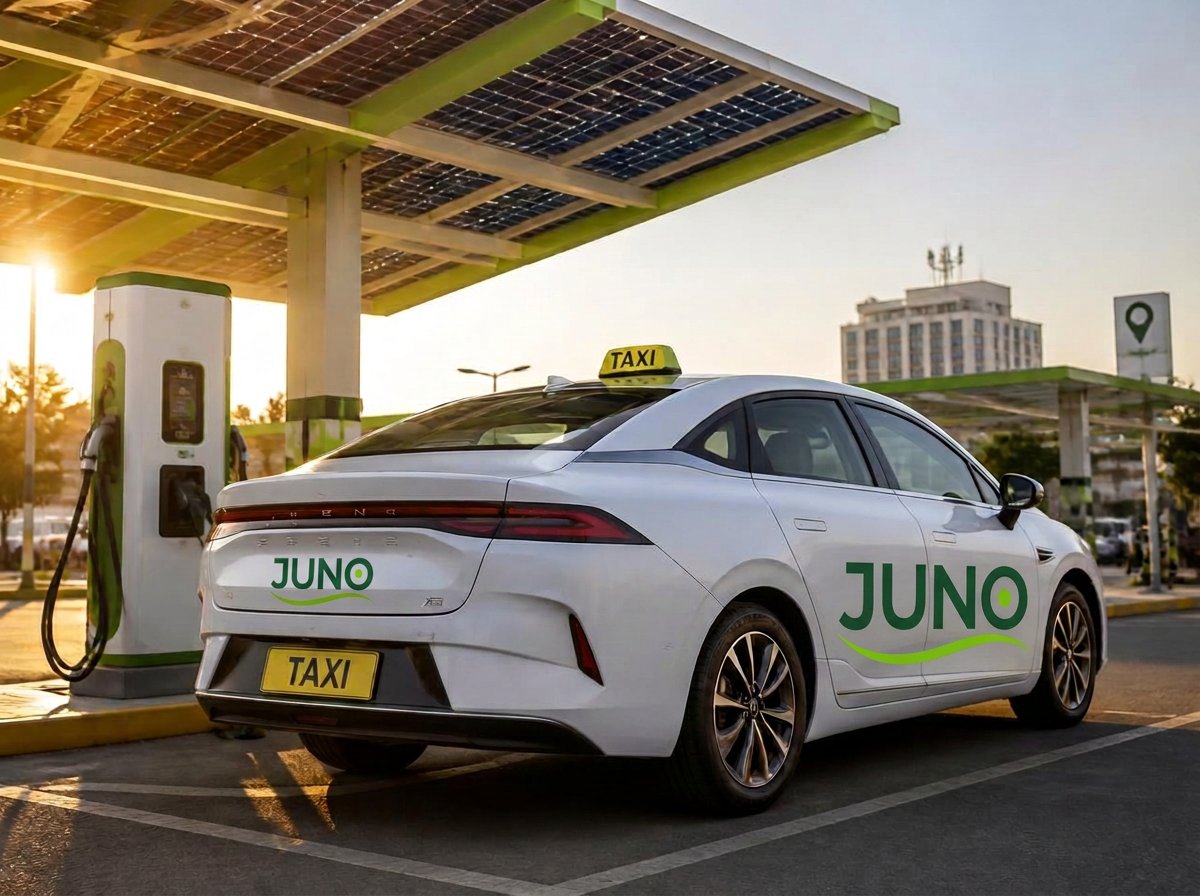
White JUNO 100% electric taxi parked on a city street

One connected system

Mobility, clean energy, jobs and local industry in a single partnership

Predictable urban travel demand makes charging investment viable; managed charging makes clean energy bankable; steady operations justify local service capability and, in time, assembly. Government gains measurable public value while the project company carries operations, technology and capital.

Step 1

Urban travel demand

Taxis, ride-hailing, airports and corporate travel create high-frequency demand.

Step 2

Managed charging

Dwell time optimises electricity purchasing; storage and solar are added where feasible.

Step 3

Jobs and skills

Certified training for drivers, technicians, charging and digital operations.

Step 4

Local industry

Service capability first, then assembly and higher-value supply-chain activity.

The story in three aspects

How JUNO builds clean mobility across Africa

Each aspect makes the next one viable: rides create charging demand, managed charging makes clean energy investment bankable, and proven operating scale earns local industrial capability.

JUNO electric taxi in a city01

Urban Fleet Operations

Electric taxi, ride-hailing, airport and corporate travel services run on one platform with consistent service, safety and data standards.

  • Branded electric fleet with driver and rider apps
  • Airport pickup zones, taxi stands and corporate accounts
  • One cost-per-kilometre dashboard across routes and drivers
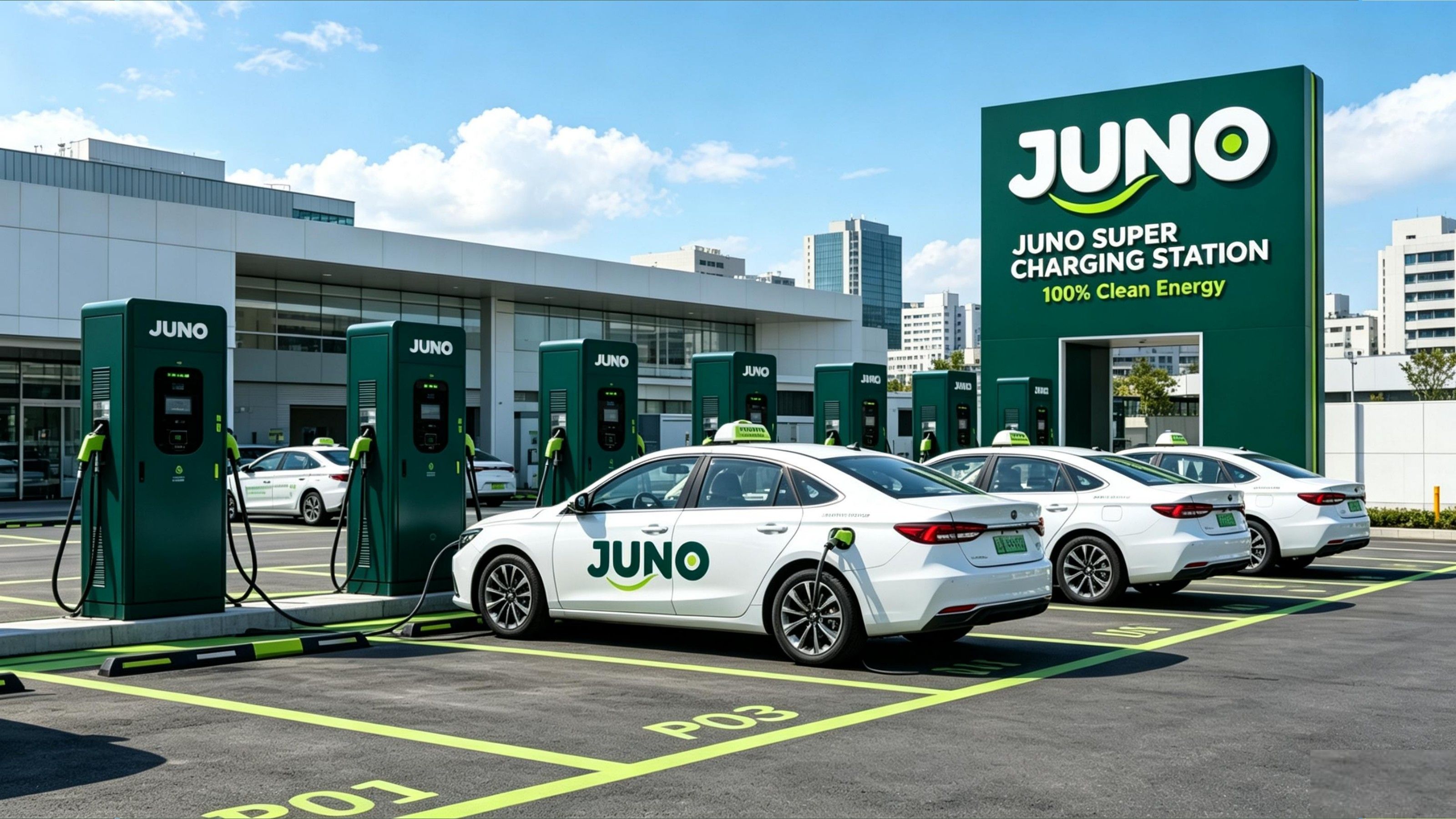
JUNO charging station with electric taxis charging02

Charging & Clean Energy

Charging designed around fleet dwell time and grid conditions, with solar and storage added at suitable sites to improve resilience and manage peak demand.

  • Centralised charging optimised against local tariffs
  • Slow charging, fast charging and storage dispatch
  • Repeatable solar-storage-charging units at mature sites
Vehicle assembly line with workers03

Local Industry & Jobs

Service capability first, then light assembly, then battery and circular services — each step triggered by real operating scale and approvals.

  • Phase 1: training, spare parts, repairs and quality control
  • Phase 2: light assembly when conditions are proven
  • Phase 3: pack, recycling, reuse and remanufacturing

Gallery

The cars and the charging ports

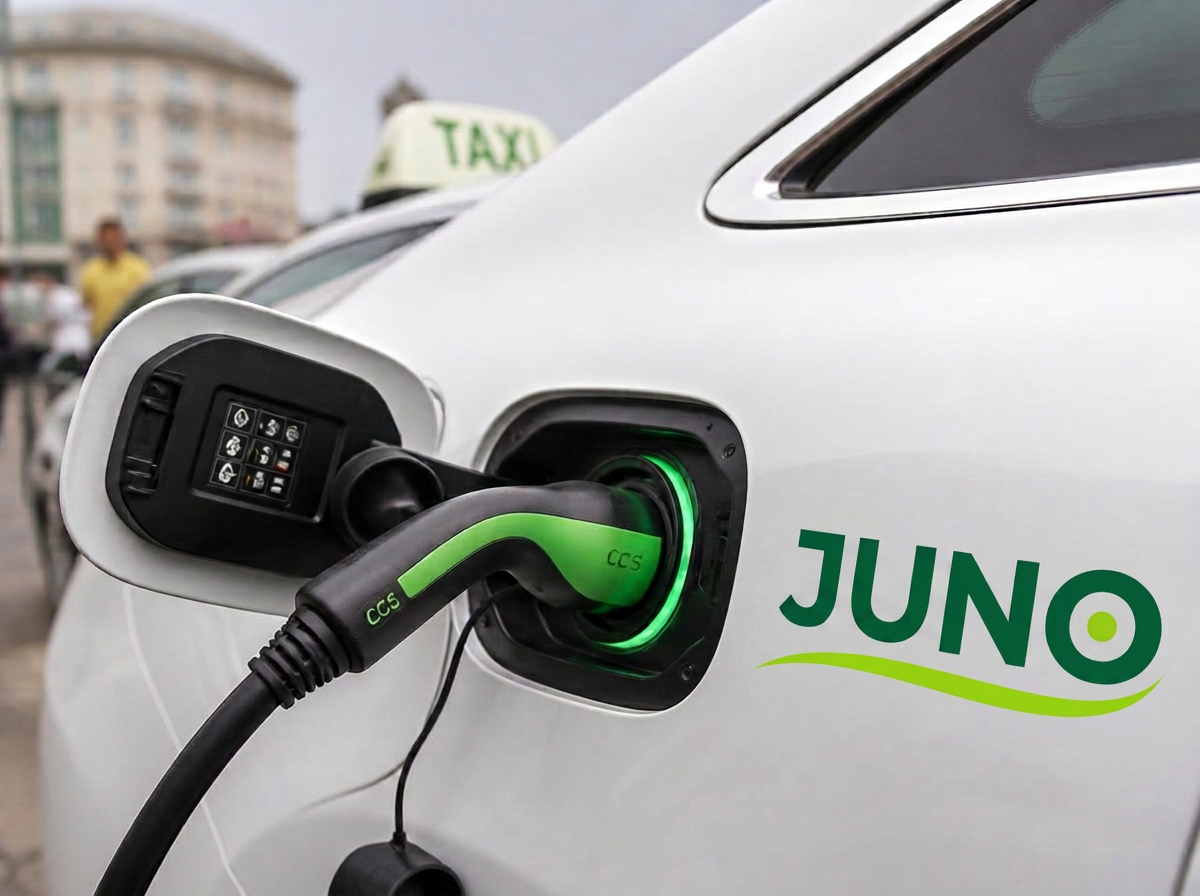
A closer look at the JUNO fleet, cabin, CCS charging ports and solar charging stations.

JUNO electric taxi charging under a solar canopyCCS charging connector plugged into an electric taxiInterior cabin of a JUNO electric taxiJUNO charging station with electric taxis charging
Open the gallery

Why now

The programme responds to four government priorities

Across African cities the same needs repeat: lower exposure to volatile fuel costs, investment staged against evidence, real jobs and skills, and industrial capability that lasts beyond the first fleet.

01

Energy security

Reduce exposure to volatile fuel costs and strengthen urban transport resilience.

02

Fiscal discipline

Stage investment against evidence, avoiding open-ended public commitments.

03

Jobs and skills

Create roles and certified training for drivers, technicians, charging and digital operations.

04

Local industry

Build service capability first, then assembly and higher-value supply-chain activities.

Source: JUNO Africa Clean Energy & Electric Mobility Government Partnership Proposal.

How it is delivered

Four government-gated stages, starting with one city

Begin with one city, one pilot and one joint governance mechanism — then scale on evidence. A shared dashboard keeps energy, economic, employment and service outcomes transparent.

0–90 days

Joint feasibility

Validate demand, energy, sites, permits, jobs and funding.

Pilot

First-city operations

Test fleet, charging, service standards and the public-value case.

Replication

Multi-city network

Scale to more cities on common operational and data standards.

Localisation

Industrial capability

Service hubs, assembly and higher-value activities when ready.